Description
Application-engineered RFID
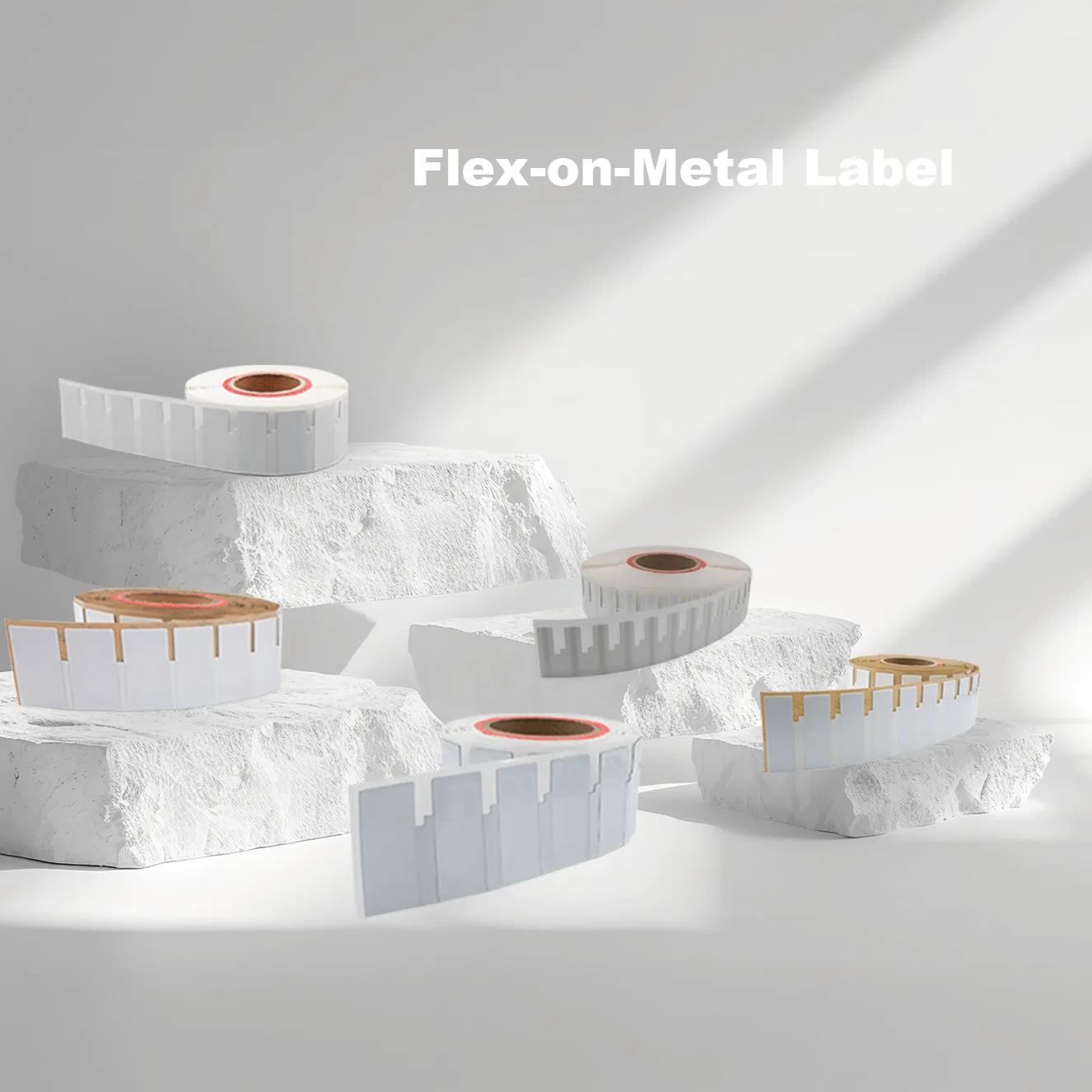
A conformable on-metal construction creates a practical identification layer for tools, equipment and space-limited assets.
Thin flexible UHF tags designed to identify metal assets where rigid tags are impractical.
Where it fits
Applications
Start with the operating workflow. The product configuration is then reviewed around the object, users, read points and surrounding environment.
Why this platform
Core capabilities
Each project is shaped by the required performance, mechanical format and integration path—not by a one-size-fits-all specification.
Designed for metal
The tag construction is intended for surfaces where conventional labels can suffer major performance loss.
Flexible, low-profile format
Thin formats support curved or space-constrained assets where a rigid housing is undesirable.
Regional configurations
Catalog models cover 865–868 MHz and 902–928 MHz frequency regions.
Multiple chip platforms
Available catalog families include Impinj, NXP, Kiloway and Qstar options, depending on model.
Source-verified data
Technical overview
Values below come from the supplied BXAIOT catalogs. Model-dependent items must be confirmed against the selected configuration.
| Frequency options | 865–868 MHz and 902–928 MHz, depending on model |
|---|---|
| Catalog size range | 20 × 10 × 1.25 mm to 100 × 40 × 1.25 mm, model-dependent |
| Catalog read-range range | 0.2–8 m, model-dependent and environment-dependent |
| Chip families | Impinj Monza / M-series, NXP UCODE, Kiloway and Qstar options, depending on model |
| Protocol / environmental limits | Pending technical review for the selected model |
Built to requirement
Customization scope
Share the application and target configuration. BXAIOT will review the technical fit before the build is confirmed.
From requirement to build
Project path
A clear validation path reduces ambiguity before production and keeps the product aligned with its real operating environment.
Define
Application, object, users, environment, read points and data flow.
Configure
Technology, chip, antenna, mechanics, materials and integration options.
Validate
Confirm source parameters and evaluate samples in the intended workflow.
Produce
Approve the final specification, artwork, data rules and quality checkpoints.
Build the complete workflow
Related products & solutions
Connect this product to the readers, tags and application layer needed for a complete deployment.
Before you specify
Frequently asked questions
These answers describe the current catalog scope without replacing project-level technical confirmation.
Why is a special tag needed on metal?
Metal changes the antenna environment and can detune a conventional RFID label. On-metal designs are built to operate in that condition.
What determines the achievable read distance?
Model, tag size, reader antenna, power, orientation, mounting surface and surrounding environment all affect performance.
Can the tag be printed or encoded?
Marking, printing and encoding can be reviewed with the chosen model and production data requirements.
Start with your application
Tell us what the product needs to do.
Send the target workflow, environment, dimensions, reader or platform details, and expected data flow. Our team will review the configuration with you.
Technical values are derived from the supplied catalog and remain subject to project confirmation. No certification, fixed lead time, MOQ or universal performance claim is implied.